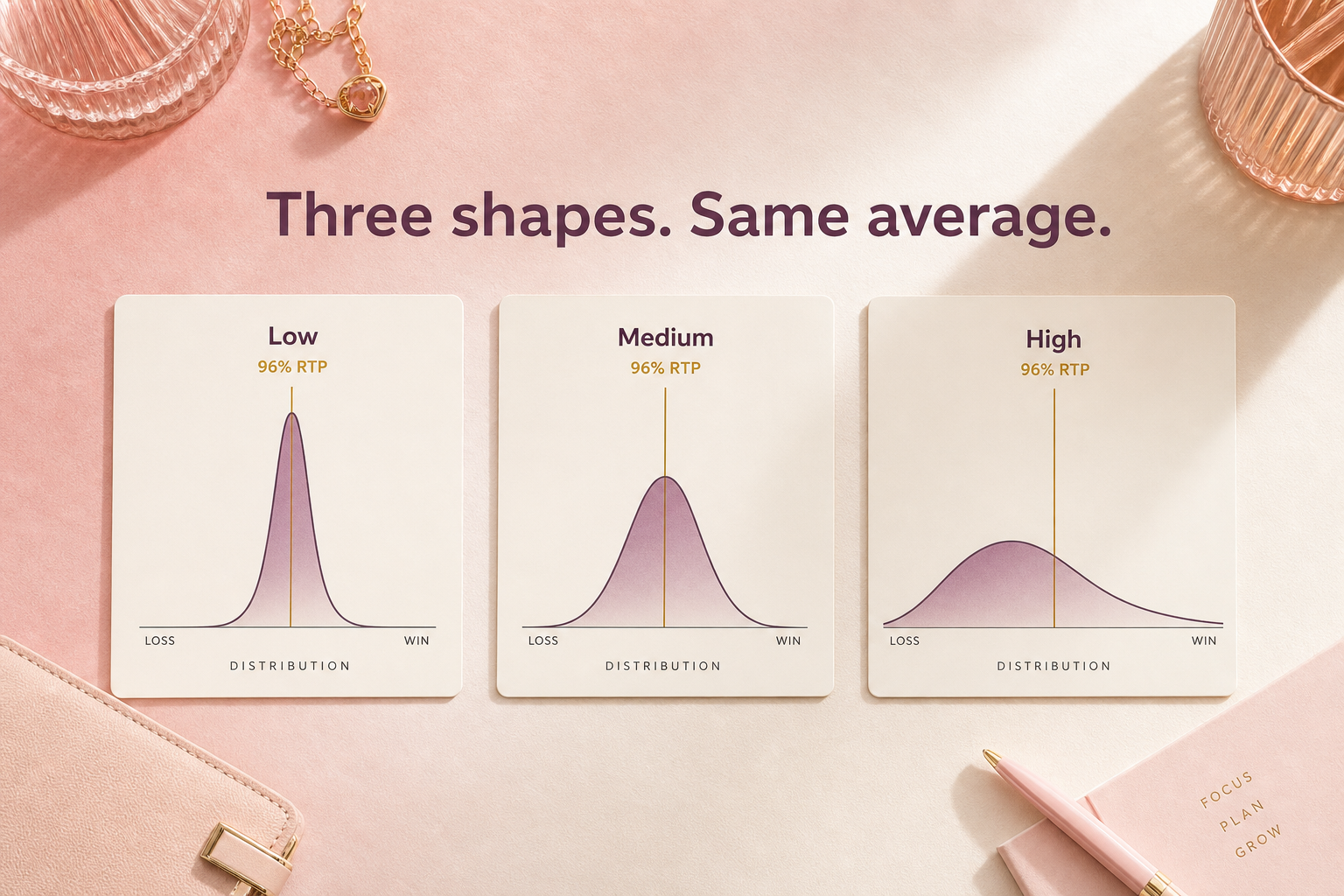
Slot variance, also called volatility, explains how wins are spread out around a slot’s RTP average. Low variance usually means more frequent smaller wins. Medium variance mixes steady hits with occasional bigger ones. High variance can bring longer dry stretches and rarer larger hits. RTP may be the same, but the session can feel very different.
By Miles Carter, Sweeps Flow Editorial | Updated June 2026
If two slots show the same RTP but one feels friendly and the other feels like it left you on read, you are probably seeing variance in action. The terms are doing the most, but the idea is simple once you separate RTP from session feel.
This slot variance explained guide breaks down low, medium, and high volatility so you can pick games with clearer expectations, better pacing, and less mystery math.

Quick Take
- Variance and volatility usually mean the same thing in slot games.
- Low variance slots tend to give more frequent, smaller wins.
- Medium variance slots sit in the middle, with a mix of smaller hits and occasional larger ones.
- High variance slots can have longer dry stretches, with rarer but larger possible hits.
- Variance does not change RTP. It changes how the results are spread out.
- Variance labels are not fully standardized, so always check the game info and current rules.
What is slot variance actually measuring?
Slot variance measures how much a game’s results can swing around its long-term RTP average. RTP tells you the average return over a very large number of plays. Variance tells you what the ride may feel like along the way.
Here is the clean version: two slots can both show a 96% RTP, but one may return lots of small wins while the other holds most of its return in rare bigger outcomes. Same average on paper, totally different session personality.
Cute RTP. Complicated personality.
For newer players, this matters because RTP is not a promise for your session. It is a long-run math figure. Your actual results can be higher, lower, smoother, or much swingier in the short term.
Responsible play note: Slots are chance-based games. Variance can affect how long your balance lasts, but it does not create a winning system or promise any result.
Slot variance explained: low, medium, and high volatility
Most players will see variance shown as low, medium, or high volatility. Some game studios use number scales, such as 1 to 5 or 1 to 10. Those labels are helpful, but they are not perfectly equal across every studio.
| Variance Type | Typical Session Feel | Common Tradeoff | May Fit Players Who Want |
|---|---|---|---|
| Low variance | More frequent smaller wins and smoother balance movement | Lower ceiling for very large single outcomes | Longer-feeling sessions and steadier pacing |
| Medium variance | A mix of smaller wins and occasional bigger hits | More swing than low variance, less drought than high variance | Balanced sessions with some surprise factor |
| High variance | Longer dry stretches with rarer larger possible hits | Wide bankroll swings and more patience required | Bigger multiplier potential and high-swing play |
What does low variance feel like?
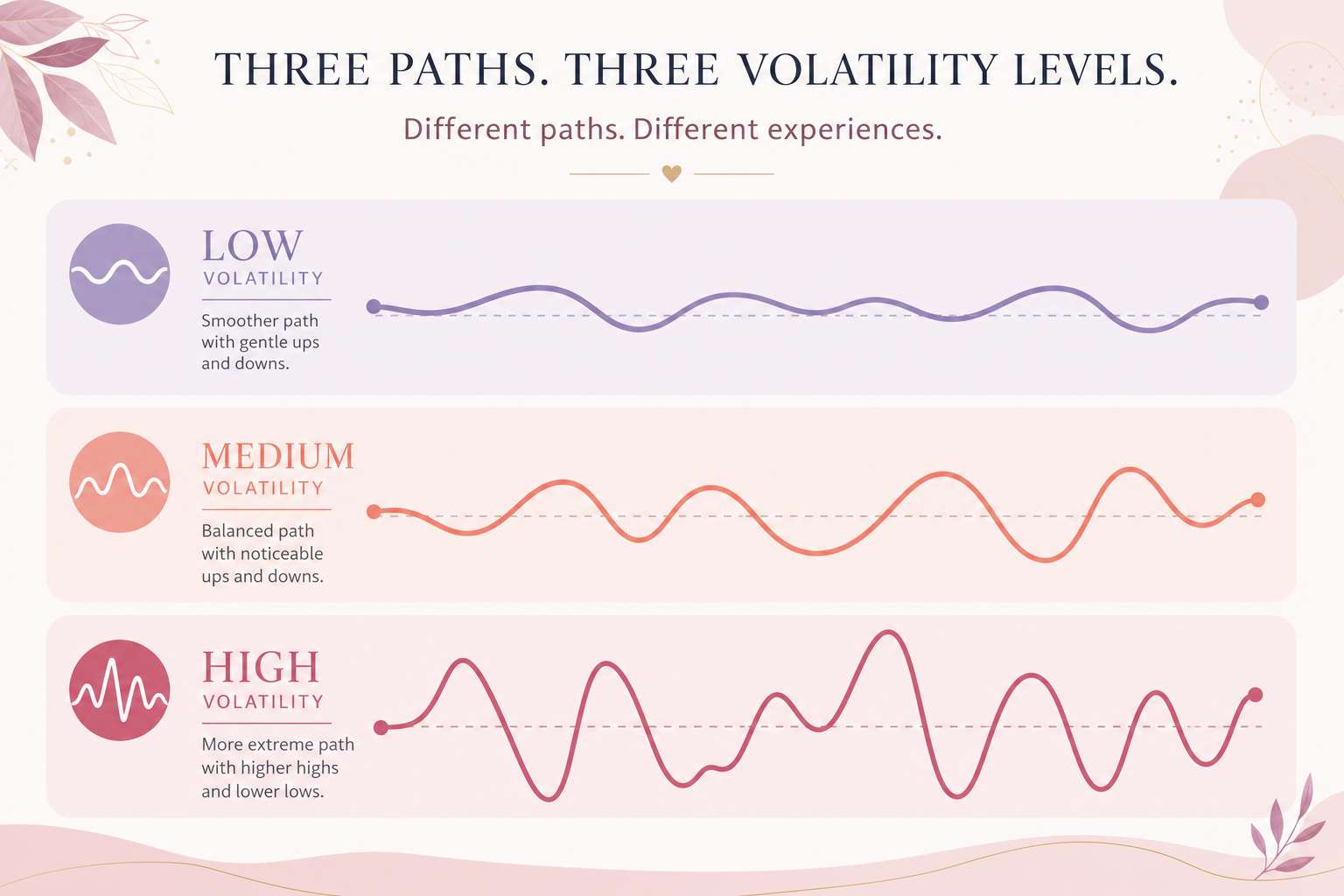
Low variance slots usually create a smoother session. Wins may show up more often, but they are often smaller. Your balance may move up and down in smaller steps rather than taking dramatic jumps.
Low variance may be a better fit if you:
- Prefer steady game action over long quiet stretches.
- Want your session to feel more even.
- Are learning slot mechanics and do not want wild swings right away.
- Care more about play time than chasing big multipliers.
The tradeoff is simple. Low variance games usually do not have the same large-outcome ceiling as high variance games. That is the bargain.
What does medium variance feel like?
Medium variance is the middle lane. You may see regular smaller wins, but the game can still throw in stronger hits from time to time. It is often where players land when they want variety without the full drama of high volatility.
Medium variance may be a better fit if you:
- Want a balanced session feel.
- Like some upside but do not want very long dry spells.
- Switch between games often and want a middle-ground option.
- Do not have a strong preference yet.
This is where the math starts acting suspicious, but in a manageable way. Medium variance can still swing, so set limits before you play.
What does high variance feel like?
High variance slots can feel slow, sharp, and emotional. You may go through longer stretches with little or no meaningful return, then see a larger hit if the right outcome lands. That swingy structure is the point.
High variance may be a better fit if you:
- Understand that dry stretches can happen.
- Use smaller bet sizes compared with your session budget.
- Can stop without chasing losses.
- Are comfortable with wider balance swings.
High variance does not mean a game is “due” to hit. It also does not mean you are more likely to come out ahead. It means the game’s return is usually packed into less frequent, larger outcomes.
Protective takeaway: If a high variance slot makes you feel pressured to raise your bet or keep going after a dry spell, that is your cue to pause.
Does variance change RTP?
No. Variance and RTP are separate ideas. RTP is the long-term average return. Variance is how bumpy or smooth the path may be.
For example, imagine two games both list the same RTP. A low variance game may spread its return across many smaller wins. A high variance game may hold more of that return in rare larger hits. Over a huge number of plays, the average may point to the same place, but a normal player session can feel completely different.
How does variance affect your session budget?
Variance matters because it changes how much room your session may need. High variance games can burn through a small session budget quickly because meaningful wins may be less frequent. Low variance games usually create less dramatic swings, though losses can still happen.
Here is a practical way to think about it:
| If you choose... | Plan for... | Smart move |
|---|---|---|
| Low variance | Smaller swings and steadier pacing | Pick a bet size that gives you enough spins to enjoy the session |
| Medium variance | Moderate swings and mixed outcomes | Keep your bet size flexible and avoid raising it after losses |
| High variance | Longer dry stretches and bigger balance movement | Lower your bet size or skip it if your budget is tight |
This is not a method to win. It is a way to keep the game from bossing your mood around. Decide your limit first, then choose the game type that fits that limit.
How do I find a slot’s variance rating?
You can usually look for variance or volatility in a few places:
- The game’s info or help screen.
- The game studio’s title page, if available.
- Third-party slot databases that publish studio-provided details.
- Casino game pages, when they include game info.
Some games use low, medium, or high labels. Others use ratings like 1 out of 5 or 8 out of 10. As a rough guide, lower numbers usually point to lower volatility, middle numbers to medium volatility, and higher numbers to high volatility. Still, labels can vary by studio, so treat them as a guide rather than a perfect rule.
Slot variance checklist before you play
Before you start a session, do a quick check. Future you deserves receipts.
- Check the volatility label: Look for low, medium, high, or a numeric rating.
- Check RTP separately: Do not assume a high RTP means a smooth session.
- Set a session limit: Decide what you are comfortable spending before you play.
- Match bet size to variance: Use smaller bets on higher volatility games if you choose to play them.
- Do not chase: A dry stretch does not mean a win is coming soon.
- Stop if it stops being fun: Frustration is a valid reason to close the game.
Which slot variance is right for you?
There is no one right answer. The better question is: what kind of session are you trying to have?
| Your Session Goal | Variance to Compare First |
|---|---|
| I want steadier play and fewer dramatic swings. | Low variance |
| I want a balanced mix of steady hits and some bigger moments. | Medium variance |
| I understand dry stretches and want higher multiplier potential. | High variance |
| I am working with a small session budget. | Low or medium variance may feel more comfortable |
What to do next
- Open the game info panel before you spin and look for RTP plus volatility.
- Pick low, medium, or high variance based on your session goal, not hype.
- Set a firm limit before play starts.
- Keep a simple note of which variance types you actually enjoy.
If you decide to register through Sweeps Flow, you can start here: Sweeps Flow registration. Terms apply. Availability and features can vary by state and platform, so check current site terms before playing.
Sweeps Flow Take
Slot variance explained comes down to one big truth: RTP tells you the long-run average, but variance tells you the vibe. Low variance is smoother. Medium variance is balanced. High variance is swingier and needs more patience, more caution, and usually smaller bets relative to your limit.
Our bestie-level advice? Do not pick a slot just because the promo screen looks sparkly. Check the volatility, set your limit, and choose the session style you can enjoy without chasing. The fine print needs supervision, and so does the spin button sometimes.
FAQs
Is slot variance the same as volatility?
Yes, in most slot discussions, variance and volatility mean the same thing. Both describe how spread out the game’s results are. Low volatility usually means steadier small wins. High volatility usually means wider swings and rarer larger outcomes.
Does high variance mean better odds?
No. High variance does not mean better odds or a better expected result. It means the game’s outcomes are more spread out. You may see longer dry stretches and rarer larger hits, but that does not make a win more likely in your session.
Can two slots have the same RTP but different variance?
Yes. Two slots can list the same RTP and still feel very different. One may pay smaller wins more often, while another may save more of its return for rare larger outcomes. That difference is variance.
Which variance is better for beginners?
Many beginners may find low or medium variance easier to understand because the swings are often less dramatic. High variance can be frustrating if you are not ready for longer dry stretches. Start with smaller bets and clear limits.
Where can I check a slot’s variance?
Look in the game’s info screen, paytable, help menu, or the studio’s official game page. Some casinos also show volatility on the game page. If a rating is not listed, do not guess. Check the current game details when available.
Affiliate disclosure: Sweeps Flow may earn a commission if you sign up or take action through some links. Our editorial guidance stays focused on player protection, clear terms, and practical fit.

Error